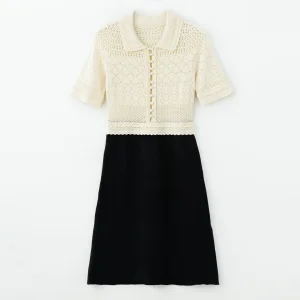
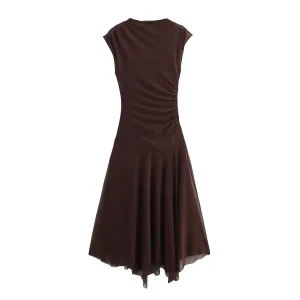
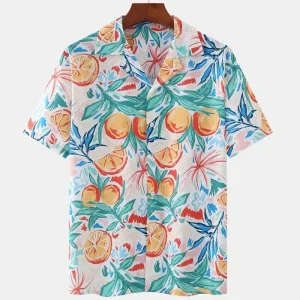
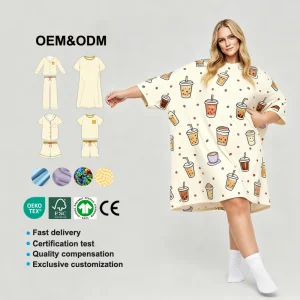
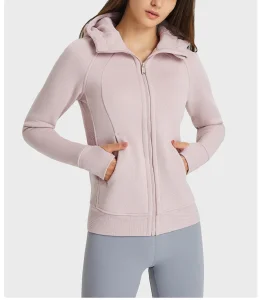
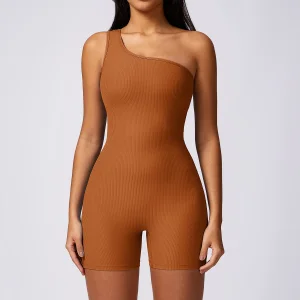
Discover our wide-ranging apparel manufacturing capabilities, from structure-engineered premium fabrics to luxury leisure garments.
An analytical overview of technical specifications, textile sustainability, and market performance for enterprise buyers.
Premium denim sourcing centers on optimizing yarn count density, ring-spun construction, and elasticity. Utilizing high-twist long-staple cotton blended with advanced elastomers (like Lycra® T400® or DualFX®) ensures that premium garments maintain shape retention over 98%, completely eliminating sag and bag knee effects in luxury ladies' wear.
Modern global brands require compliance. Our denim production integrates sustainable indigo lock dyes and ozone washing technology, lowering water usage by up to 85%. Standard chemical enzymes are replaced with eco-friendly bio-polishing processes that guarantee standard safety indicators conform to major international import parameters.
Women's premium denim requires absolute precision. Our pattern grading system targets the three crucial fit dynamics: rise height stabilization, thigh compression gradient adjustment, and contoured waistline construction to prevent back gapping. This standardizes consistency across diverse international size runs from US 0 to US 24.
Integrating advanced OEM/ODM production, rigorous international quality control, and unparalleled capacity scaling.
Established in 2013, Guangzhou Setor Fashion Co., Ltd. has grown to become a benchmark women's apparel manufacturer. Based in the heart of China’s premium textile production hub in Guangzhou, Guangdong, we operate a state-of-the-art manufacturing facility spanning over 15,000 square meters. Housing a dedicated team of more than 250 experienced employees, we combine technological precision with skilled artisan finishing to produce premium apparel that complies with global standards.
From initial design draft and physical pattern creation to raw fabric optimization, washing finishing, and strict quality control, we manage the complete lifecycle of fashion design. As a specialized Custom OEM Women's Premium Denim Supplier, we understand the specific nuances that set apart premium fashion labels—namely, stretch recovery, seamless wash transitions, and robust edge stitching.
We work in tandem with global fashion conglomerates, boutique brands, e-commerce retailers, and large-scale wholesale operations. Our comprehensive OEM/ODM garment solutions include:
Navigating environmental targets, supply chain security, and import standards for international expansion.
Global regions mandate distinct chemicals restriction policies. To ship freely to Europe and North America, premium denim must meet standard OEKO-TEX Standard 100 levels. We guarantee that all fabrics, including dyestuffs and auxiliary processing elements, comply with REACH, GRS (Global Recycled Standard), and zero discharge of hazardous chemicals (ZDHC) principles.
Enterprise brands face intense scrutiny concerning workplace conditions. Setor Fashion facilities maintain standard certifications including BSCI and Sedex audits. We provide absolute transparency in workforce safety, wage metrics, working hours, and operational safety, securing brand reliability in premium consumer spheres.
B2B buyers face shifting tariff systems and customs procedures. Strategically positioned close to Guangzhou and Shenzhen shipping networks, we optimize freight routes, provide HS Code classifications for custom denim constructions, and facilitate seamless customs clearance to optimize delivery timelines.
Discovering how geographic integration, vertical supply chains, and design intelligence create production advantages.
Within the apparel sphere, geographic clustering is a critical success factor. Setor Fashion is located inside the Pearl River Delta apparel manufacturing hub, granting direct access to raw raw-material markets, advanced wash-treatment complexes, and specialized machinery suppliers. Unlike fragmented supply chains in developing markets, Guangzhou boasts a vertical industry structure:
This allows Setor Fashion to shorten prototyping phases, reduce logistics times, and process intricate fabric requests that require deep material engineering.
The women's premium denim segment is shifting from cheap fast fashion toward structured longevity, eco-responsibility, and utility-driven designs. Contemporary buyers prioritize:
Analyzing consumer lifestyle fits across key regions and demographics to optimize product lines.
Demographic: Urban Professional Markets (US, UK, Northern Europe).
Requirement: Clean indigo and dark black washes in straight-leg and trouser-cut silhouettes. Zero distressing, flat-lock interior seams, and subtle high-density pocket embroidery. Requires comfortable stretch fabric containing modal for comfortable extended wear during work hours.
Demographic: Fashion-Forward & Streetwear Segments (Australia, Japan, Western Europe).
Requirement: Loose-fitting barrel silhouettes and Carpenter jean details constructed from heavyweight 100% cotton open-end denim. Features visible weave patterns, structured drape, and natural tint washes achieved via ozone processing.
Demographic: Premium Athleisure & Mid-High Segment Retail.
Requirement: Super-stretch denim with up to 4% spandex using Lycra DualFX. This construction is designed with specialized curved hip patterns and contoured waistbands that maintain active shaping without restricting movement.
Clear, expert insights addressing standard B2B procurement concerns, technical parameters, and manufacturing steps.
Leveraging our diverse production lines to supply dynamic product ranges for multi-category retail platforms.
 Setor Fashion