Sourcing women’s fashion in 2026 requires more than scrolling through viral images. Buyers need reliable signals, practical market knowledge, and a clear understanding of customer needs. The question “what are the latest trends in women's fashion” should lead to research, not rushed purchasing. Runway collections, retail data, creator styling, and customer feedback can reveal different parts of the trend cycle.
Look closely at tangible details. A cropped jacket may appear across several collections, but its fabric, fit, and price vary widely. Soft tailoring, expressive denim, sheer layering, and versatile neutral colors may attract attention. However, trend reports should be compared with sales performance and regional preferences. Speak with verified suppliers, request samples, and inspect stitching, fabric weight, sizing, and care labels. Small details matter.
Reliable sourcing also involves responsible decisions. Confirm supplier credentials, production information, delivery terms, and return policies before placing an order. Avoid copying protected designs or making unsupported sustainability claims. Fashion moves quickly, but dependable evidence moves more slowly. That tension deserves attention.
Some predictions will be wrong. That is normal. A color that dominates social media may sell poorly in physical stores. A quieter silhouette may perform better over several seasons. Test limited quantities, record customer responses, and adjust carefully. By combining professional observation with transparent research, retailers can discover relevant 2026 trends without sacrificing quality, trust, or commercial judgment.
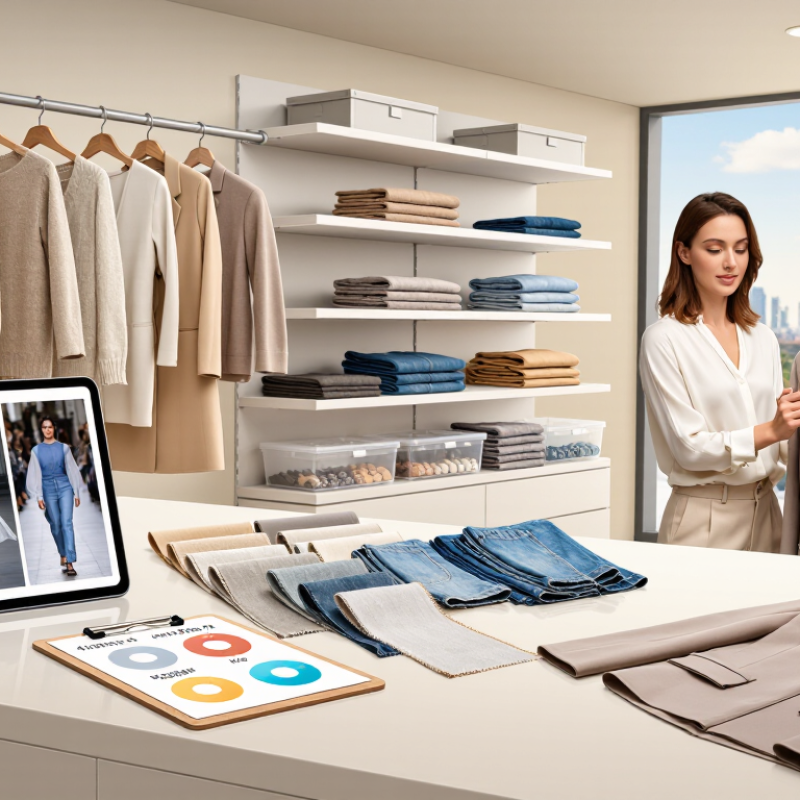
To source 2026 womenswear trends, start with signals that can be checked, not attractive mood boards. McKinsey and The Business of Fashion’s State of Fashion 2025 described fashion growth as low and uneven. That matters. It suggests shoppers may reward practical design, durability, and adaptable pricing. The 2025 ThredUp Resale Report projected the global secondhand apparel market could reach 367 billion dollars by 2029. This points toward longer product life and renewed interest in pre-owned styles.
Use several reliable sources together. Track retail sell-through data, search-volume changes, fashion-week reports, and consumer research. Search tools reveal rising language, such as “linen trousers” or “soft tailoring,” but they do not prove purchases. Compare those signals with reports from Euromonitor, Circana, and national statistical agencies. I also review store-level observations, including fabric feel, sleeve shapes, and repeated colors across independent shops. My method is useful, but imperfect. Small samples can create false confidence. A trend may look strong online and remain weak in physical sales.
Tips: Record each signal’s date, market, and source. Prefer repeated evidence across three channels. Check whether interest lasts for eight to twelve weeks. Separate seasonal noise from structural change. Ask whether the trend solves a real wardrobe problem. Then test a small quantity before committing to larger orders. That restraint can prevent expensive guesses.
| Source Category | Reliable Data Source | Trend Signal to Monitor | Typical Update Cycle | Useful Measurement | Expected Lead Time | Reliability | Recommended Validation Method |
|---|---|---|---|---|---|---|---|
| Runway and Fashion-Week Coverage | Official show schedules, designer collection notes, runway photography, and professional fashion journalism | Repeated silhouettes, garment proportions, fabric treatments, styling details, and color families appearing across multiple collections | Seasonal; concentrated around major spring/summer and autumn/winter presentation periods | Count the number of independent collections showing the same design element and record its recurrence across regions | 6–18 months | High for creative direction | Confirm the pattern across at least three unrelated collections and compare it with retail or consumer-demand data |
| Consumer Search Behavior | Public search-interest indexes and keyword trend tools | Rapid growth in searches for garment types, colors, materials, styling terms, and occasion-based dressing | Daily, weekly, or monthly depending on the tool | Search-interest index on a normalized 0–100 scale, growth rate, regional distribution, and related queries | 1–6 months | High for demand direction | Use a minimum four-week trend window, remove event-driven spikes, and compare with product availability and sales evidence |
| Social Media Conversation | Aggregated public posts, creator content, visual-recognition tools, and social listening dashboards | Increasing post volume, repeated outfit formulas, rising saves or shares, and consistent styling language | Daily or weekly | Mentions, engagement rate, unique creators, geographic spread, sentiment, and the number of independent visual references | 2–12 weeks | Medium to high | Separate organic activity from paid promotion, prioritize unique creators, and verify whether engagement converts into search or retail demand |
| Retail Assortment and Stock Movement | Public product catalogs, category pages, availability changes, markdown patterns, and retailer assortment reports | New category expansion, repeated product details, faster sell-through, low-stock frequency, and reduced markdown dependence | Weekly or monthly | New-item count, category share, in-stock rate, sell-through rate where available, markdown frequency, and assortment depth | Immediate to 3 months | High for commercial validation | Compare at least three retail channels and control for seasonality, supply shortages, promotions, and price changes |
| Resale and Second-Hand Activity | Public resale listings, completed-sale records, search filters, and category-level marketplace reports | Rising demand for specific garment eras, cuts, materials, colors, or previously underrepresented categories | Weekly or monthly | Listing growth, completed-sale ratio, median selling price, time to sale, and repeat searches | 1–6 months | Medium to high | Use completed sales rather than listing counts alone and adjust for scarcity, seasonality, condition, and price differences |
| Street Style and Editorial Photography | Time-stamped street-style archives, editorial imagery, event photography, and independent fashion publications | Real-world adoption of runway ideas, styling combinations, accessories, layering methods, and outfit proportions | Weekly during major fashion events; monthly otherwise | Frequency of a visible trend, number of locations, diversity of wearers, and repetition across unrelated events | 1–6 months | Medium | Use images from multiple cities and dates, avoid relying on a single event, and distinguish editorial styling from ordinary consumer adoption |
| Color and Material Intelligence | Public color standards, textile-fair reports, fiber research, material supplier information, and seasonal design forecasts | Repeated movement toward particular color groups, fiber compositions, surface textures, finishes, and lower-impact material choices | Quarterly or seasonal | Color-family recurrence, material mentions, fiber availability, certification references, and supplier adoption | 6–24 months | High for product planning | Cross-check creative forecasts with material availability, regulatory requirements, cost data, and consumer search behavior |
| Weather and Climate Data | National meteorological services, historical climate databases, and seasonal weather outlooks | Demand changes related to heat, rainfall, cold spells, transitional weather, and regional climate variability | Daily, monthly, and seasonal | Temperature anomalies, precipitation, heating or cooling degree days, and regional weather deviation from historical averages | Immediate to 3 months | High for timing | Combine climate data with local sales, search behavior, and inventory levels instead of treating weather as a style trend by itself |
| Economic and Household Indicators | Official statistical releases covering inflation, household expenditure, wages, employment, and consumer confidence | Changes in discretionary spending, price sensitivity, demand for value, and preference for durable or versatile clothing | Monthly or quarterly | Apparel-price inflation, real disposable income, consumer-confidence movement, and household-spending changes | 1–12 months | High for market context | Use official data definitions, compare year-over-year and month-over-month movements, and separate volume changes from price changes |
| Cultural and Search-Event Signals | Public calendars, entertainment schedules, sporting-event calendars, travel data, and cultural trend reports | Temporary or recurring demand for occasionwear, travel dressing, workwear updates, festival clothing, and modest or adaptive options | Weekly or monthly | Event volume, audience size, search uplift, regional relevance, and the duration of the demand increase | 2 weeks–6 months | Medium | Classify the signal as temporary or structural and confirm it with purchase, search, and assortment data |
| Regulatory and Sustainability Data | Government regulations, environmental reporting standards, textile-waste statistics, and publicly documented compliance requirements | Growing importance of traceability, durability, repairability, recycled content, product information, and responsible claims | Monthly or quarterly | Regulatory deadlines, disclosure requirements, material documentation, product-life indicators, and waste statistics | 6–36 months | High for strategic planning | Verify every claim against primary legislation or official guidance and distinguish mandatory requirements from voluntary initiatives |
| Trend-Signal Scoring | Combined dashboard built from the source categories above | A trend that appears consistently across creative, consumer, commercial, and contextual data | Weekly review with monthly consolidation | Weighted score based on source diversity, growth rate, geographic spread, persistence, and commercial confirmation | 2–18 months | Highest when triangulated | Classify a signal as actionable only when it is supported by at least three independent source categories and remains visible for multiple reporting periods |
Compare runway reports, retail sales, social searches, customer reviews, and street observations.
Start with small orders in two colors and limited size ranges.
Check stitching, fabric recovery, lining, fasteners, measurements, and color consistency.
Consider climate, lifestyle, age range, local habits, and spending power.
Include colors, silhouettes, fabrics, target margins, delivery windows, and key measurements.
Request fabric cards, graded samples, production timelines, testing records, and traceability documents.
Include shipping, duties, packaging, alterations, markdowns, and possible returns.
Launch proven core pieces, then add limited quantities of riskier trend items.
Sourcing the latest women’s fashion trends in 2026 requires a structured approach that combines reliable trend signals with practical market research. To answer “what are the latest trends in women's fashion,” businesses should examine consumer data, search behavior, purchasing patterns, and emerging preferences for color, fabric, fit, functionality, and versatility. Runway direction, retail activity, social media conversations, and street style can provide additional insights, but each signal should be evaluated carefully rather than followed blindly.
A successful sourcing strategy should assess whether a trend is relevant to the target customer, commercially realistic, well-made, and aligned with responsible production standards. Suppliers should be reviewed for consistency, material quality, transparent practices, lead times, and the ability to adapt designs without sacrificing fit or durability. By combining trend forecasting with customer-focused analysis and disciplined supplier evaluation, fashion businesses can develop women’s collections that feel current, distinctive, wearable, and commercially sustainable throughout 2026.

 Setor Fashion