Choosing what to wear in 2026 involves more than following seasonal trends. It requires reading the occasion, understanding your comfort, and noticing how clothing performs in real life. A linen blazer may feel polished at a daytime meeting, while a soft knit dress can suit a family dinner. Fabric, movement, weather, and cultural expectations all matter. Small details matter too.
Stylist Stacy London has said, “Fashion is about dressing according to what’s fashionable. Style is more about being yourself.” Her observation offers a useful foundation for how to choose women's clothing for different occasions. Begin with the setting, then consider the message you want your outfit to communicate. For work, test whether the jacket stays comfortable after several hours. For weddings, check the dress code and avoid competing with the ceremony’s focus. For travel, choose breathable layers, supportive shoes, and fabrics that resist wrinkles. For casual gatherings, combine practicality with one intentional detail, such as a colorful scarf or structured bag.
There is no perfect formula. We sometimes overdress. We sometimes choose comfort too quickly. That is worth noticing, not hiding. A reliable wardrobe should support movement, confidence, and personal identity without demanding constant replacement. In this guide, we will examine proportion, color, fabric, fit, and occasion-specific etiquette. The goal is not to copy every trend. It is to make thoughtful choices that remain useful beyond one photograph or one evening.
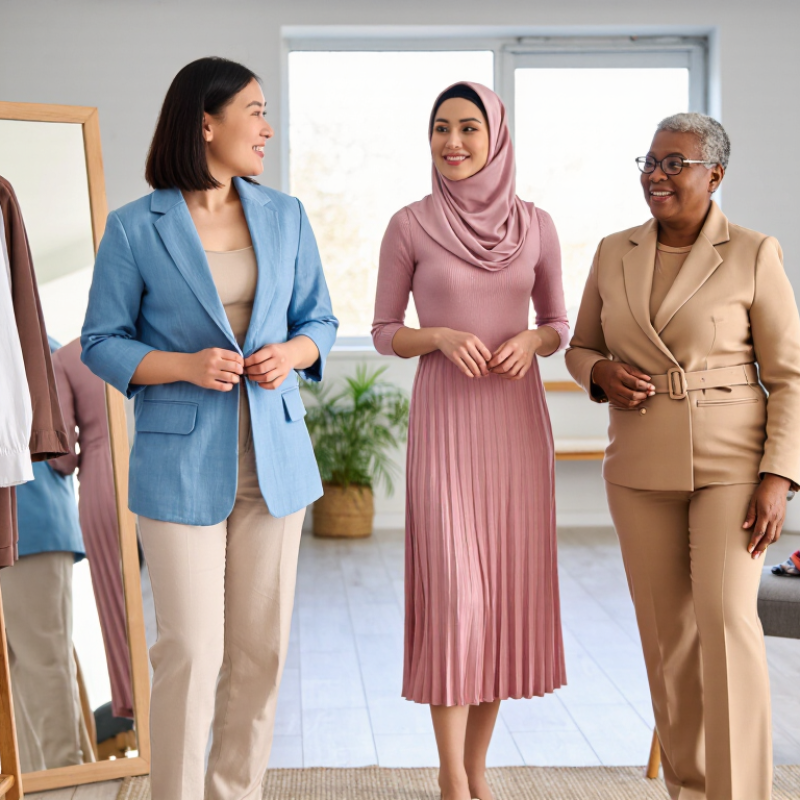
Choosing women’s clothing in 2026 starts with one practical question: what does the occasion require? Statista’s global apparel market forecast of $1.79 trillion shows the industry’s enormous scale. It also suggests more choice, not automatic clarity. A clothing decision should match the event, location, time, and expected dress code.
For a formal dinner, choose a structured dress or tailored separates with refined shoes. A museum opening may allow artistic details, but clean lines still look intentional.
For business meetings, a fitted jacket, opaque blouse, and comfortable trousers provide professional balance. Casual does not mean careless. Dark jeans, a neat knit, and polished flats can suit a café meeting or weekend gathering.
I still misread dress codes sometimes. “Smart casual” remains frustratingly vague.
Tips:
Read the invitation twice. Search the venue’s setting. Consider weather and travel time. Test sitting, walking, and reaching before leaving home. Choose breathable fabric for crowded rooms. Keep one simple layer available. If the dress code is unclear, ask the host rather than guessing. Small details matter. A wrinkled sleeve can weaken an otherwise excellent outfit. More importantly, clothing should support movement and confidence, not create constant adjustment. The market may be growing, but personal judgment remains the most useful styling tool.
Choosing women’s clothing in 2026 means dressing for movement, temperature, and changing work settings. The WFH Research project’s 2024 data found that employees with remote-capable jobs worked from home about one-quarter of their days. A soft knit may suit a video meeting, but a structured jacket still helps when clients arrive unexpectedly.
Match fabric to the climate first. Linen, cotton, and lightweight wool can improve airflow in warm offices. Merino wool and layered knits provide warmth without excessive bulk. Textile Exchange’s Materials Market Report 2024 reported that polyester represented about 57% of global fiber production in 2023. It can dry quickly, but it may feel less breathable during humid commutes. I still choose the wrong fabric sometimes. A polished outfit can become uncomfortable by lunchtime.
Tips: Test the outfit while sitting, walking, and reaching. Choose a relaxed shoulder and a waistband that does not press when seated. Keep one breathable layer in your work bag. In colder regions, add a thin base layer instead of one heavy garment. For hybrid days, select trousers with stretch, a washable blouse, and shoes suitable for both pavement and office floors. Fit should support real movement, not only a mirror pose.
| Occasion and Hybrid-Work Context | Climate / Temperature | Recommended Fabric Selection | Practical Fit | Useful Garment Formula | Comfort and Performance Priorities |
|---|---|---|---|---|---|
| Video Meetings at Home | 18–24°C 64–75°F |
Cotton Lyocell Fine merino | Relaxed through the body with a neat shoulder line; avoid tight sleeves that restrict movement. | Soft knit top or blouse with a structured cardigan and comfortable pull-on trousers. | Breathability, low-pressure waistbands, camera-ready neckline, and fabrics that resist visible creasing. |
| Office and Coworking Days | 18–23°C 64–73°F |
Wool blend Tencel™ lyocell Cotton twill | Moderate ease at the bust and hips; a lightly shaped blazer creates structure without limiting reach. | Breathable shell, straight-leg trousers, and an unlined or partially lined blazer. | Layering flexibility, wrinkle resistance, stretch recovery, and enough room for sitting for long periods. |
| Client Presentation or Interview | 18–22°C 64–72°F |
Worsted wool Wool blend Silk blend | Clean shoulder fit, defined waist or straight silhouette, and hems that remain stable while walking. | Tailored blazer, opaque blouse, ankle-length trousers or knee-length skirt, and polished closed-toe shoes. | Opacity, crease control, quiet movement, professional structure, and comfort during extended standing. |
| Commuting in Warm, Humid Weather | 24–32°C 75–90°F |
Linen Cotton voile Lyocell | Loose or semi-relaxed fit with airflow around the underarm, waist, and legs; avoid clingy fabrics. | Breathable button-up shirt, wide-leg trousers or midi skirt, and a lightweight washable layer. | Moisture evaporation, ventilation, light weight, quick drying, and comfortable movement in transit. |
| Hot Outdoor Events | 28–38°C 82–100°F |
Linen Light cotton Rayon | Airy, non-clinging silhouette with a hemline suitable for the setting; choose fuller cuts for better airflow. | Breathable dress or coordinated top and skirt with a sun-protective hat and comfortable sandals. | Light color, ventilation, sun coverage, sweat management, and footwear stability on warm surfaces. |
| Cool Outdoor Commute | 5–15°C 41–59°F |
Wool Merino Cotton twill | Close but not restrictive base layer; outer layer should allow a sweater underneath without pulling. | Merino base layer, knit sweater, straight trousers, water-resistant coat, and low-profile boots. | Insulation, layering capacity, wind protection, moisture management, and easy removal indoors. |
| Rainy-Day Travel | 8–20°C 46–68°F |
Synthetic shell Merino Polyester blend | Streamlined layers with enough room for mobility; choose cropped or tapered hems to reduce splash contact. | Moisture-wicking base, lightweight knit, waterproof or water-resistant shell, and non-slip shoes. | Water resistance, fast drying, packability, traction, and minimal fabric volume when carrying luggage. |
| Business Dinner After Work | 16–24°C 61–75°F |
Crepe Silk blend Fine wool | Skimming rather than tight; select a defined neckline and a hem that allows comfortable seated movement. | Polished midi dress or fluid blouse with tailored trousers, plus a removable blazer. | Low-wrinkle finish, comfortable sitting, opacity under restaurant lighting, and easy transition from office to evening. |
| Travel and Airport Days | Variable | Jersey Merino Stretch woven | Relaxed fit with a stable waistband, non-restrictive armholes, and hems that do not drag. | Layered knit top, stretch trousers, lightweight overshirt or cardigan, and supportive slip-on shoes. | Temperature adaptability, wrinkle resistance, pocket utility, easy layering, and comfort during prolonged sitting. |
| Light Exercise or Active Errands | 10–30°C 50–86°F |
Moisture-wicking polyester Nylon Elastane blend | Close enough to prevent snagging but not compressive unless the activity specifically requires compression. | Breathable performance top, stretch joggers or shorts, lightweight layer, and supportive athletic shoes. | Moisture movement, four-way stretch, chafe reduction, ventilation, and secure pockets. |
| Formal Evening Occasion | 15–24°C 59–75°F |
Silk Satin Velvet | Choose a silhouette that permits normal walking, sitting, and arm movement; check hem length with the intended shoes. | Floor-length or midi dress, tailored evening separates, formal shoes, and a lightweight wrap or jacket. | Comfortable lining, secure closures, appropriate coverage, temperature control, and stable footwear. |
| General guide: temperature ranges describe typical indoor or outdoor comfort conditions, not strict rules. Fabric performance varies with weave, weight, finish, garment construction, and personal sensitivity. For hybrid work, prioritize adaptable layers, a comfortable seated fit, and one structured element for professional settings. | |||||
A 2026 wardrobe should handle real occasions, not imagined perfection. For work, choose a washable shirt, tailored trousers, and a soft jacket. For travel, add relaxed layers, comfortable shoes, and one weatherproof coat. A simple dress can serve dinner, ceremonies, or meetings when accessories change.
Use the 30-wear benchmark before buying. Ask whether you can wear each piece at least thirty times within two years. WRAP’s Valuing Our Clothes research found that extending a garment’s active life by nine months can reduce its carbon, water, and waste footprints by around 20–30%. That makes repeated wear more powerful than constant “eco” shopping. Keep a small record on your phone. Count the blue shirt after office days, weekend lunches, and family events.
Material choice still matters. The European Environment Agency reports that EU textile consumption creates major environmental pressure through raw materials, water, and production. Choose durable fabrics, repairable seams, and colors that combine easily. A dark skirt, for example, can work with a knit sweater, crisp blouse, or evening top.
Yet thirty wears is not a perfect rule. Pregnancy, changing work policies, climate, or body changes can make it unrealistic. I have also kept “versatile” pieces that felt uncomfortable after two hours. That was poor judgment, not sustainable planning. Fit, comfort, care instructions, and actual lifestyle should guide the final decision.
Choosing women’s clothing for every occasion starts with a realistic budget, not a crowded wardrobe. McKinsey’s 2025 apparel analysis highlights uneven price pressure, cautious spending, and stronger demand for perceived value. That matters when planning workwear, weekend outfits, or formal pieces. A lower price does not always mean lower cost.
Use cost-per-wear to compare purchases. Divide the total price by the number of times you expect to wear an item. For example, a $120 blazer worn 24 times costs $5 per wear. A $45 dress worn twice costs $22.50 per wear. I often check this before buying occasion clothing. The calculation is simple, but my estimates are sometimes too optimistic. Real life includes changing sizes, damaged fabrics, and forgotten items.
Begin with pieces that serve several settings. A washable black skirt may work with a blouse at work, a sweater at dinner, and a jacket during travel. Check fabric weight, stitching, lining, and care instructions before paying. These details affect durability more than a polished product photo. In 2025’s price-sensitive market, compare quality per wear rather than chasing constant discounts. Leave room for tailoring, cleaning, and seasonal storage. A budget without these costs can look accurate while quietly failing.
Online apparel shopping is expanding quickly.
Statista’s Digital Market Insights forecasts global fashion e-commerce revenue above US$1 trillion in 2025, with further growth expected through 2026.
More sales also create more sizing mistakes.
A polished product photo cannot confirm fit.
Measure your bust, waist, hips, and inseam before choosing women’s clothing. Compare those numbers with the garment’s actual size chart, not only the displayed size. Check fabric composition, lining, stretch, stitching, and care instructions.
A cotton dress may shrink, while elastane can change its recovery after repeated washing.
I still get this wrong sometimes. A chart is useful, but it is not a guarantee.
Return policies deserve equal attention.
Review the return window, refund method, excluded items, and shipping responsibility before payment.
The 2024 National Retail Federation and Appriss Retail report estimated that 16.9% of U.S. retail sales were returned, worth about US$890 billion.
Online purchases can involve even more uncertainty, especially when fit information is incomplete. Save the order confirmation and photograph the package before opening it. Look for clear measurements and customer comments about height, fabric weight, and transparency.
Vague wording should slow the purchase.
A low price is not low risk.
Start with breathable fabrics such as linen, cotton, or lightweight wool. Add a thin base layer in cold regions. Carry one breathable layer in your work bag. I sometimes choose polished clothes that feel uncomfortable by lunchtime.
Test clothing while sitting, walking, and reaching. Choose relaxed shoulders and a waistband that does not press when seated. Fit should support movement, not only mirror poses.
Try stretch trousers, a washable blouse, comfortable shoes, and a soft jacket. Add a weatherproof coat for travel. Shoes should handle pavement and smooth office floors.
Select durable pieces in coordinating colors. A dark skirt can pair with a knit sweater, crisp blouse, or evening top. Small wardrobe. Better use.
Ask whether you can wear each item thirty times within two years. Record wears after workdays, lunches, and family events. The rule helps, but it is not perfect. My “versatile” clothes sometimes failed after two hours.
Measure your bust, waist, hips, and inseam. Compare those numbers with the garment’s size chart, not only its displayed size. A chart helps. It cannot guarantee fit.
Check fabric composition, lining, stretch, stitching, and care instructions. Cotton may shrink, while stretch fibers can lose recovery after repeated washing. Durable seams matter.
Read return deadlines, refund methods, excluded items, and shipping responsibility before paying. Save the order confirmation and photograph the package before opening it. Vague wording should slow the purchase. A low price is not low risk.
How to choose women's clothing for different occasions begins with understanding the setting, dress code, weather, and level of activity. From professional meetings and hybrid-work days to celebrations, travel, and casual weekends, the right outfit should balance appropriateness, comfort, and personal style. Fabric, layering, color, and fit all matter: breathable materials suit warm climates, while adaptable layers provide flexibility in changing conditions. A practical wardrobe can support the expanding global apparel market while remaining focused on everyday usefulness.
The article also explains how to build a capsule wardrobe around a 30-wear sustainability goal, selecting versatile pieces that can be styled repeatedly. Budget decisions should consider cost per wear, durability, and changing apparel prices rather than focusing only on the initial purchase. For online shopping, carefully checking measurements, fabric details, construction quality, customer feedback, and return policies can reduce mistakes. Together, these strategies make clothing choices more intentional, comfortable, economical, and suitable for the varied demands of 2026.

Setor Fashion